



KORAL
End Date 12/11/2027
Email paolo.colangelo@cnr.it
The KORAL project – Biomarker genes from coastal ecosystem monitoring: a stronghold for the assessment of heavy metals impact – aims to assess the impact of heavy metal contamination on Mediterranean coastal dune ecosystems through an innovative, multidisciplinary approach integrating classical ecological surveys with cutting-edge molecular analyses.
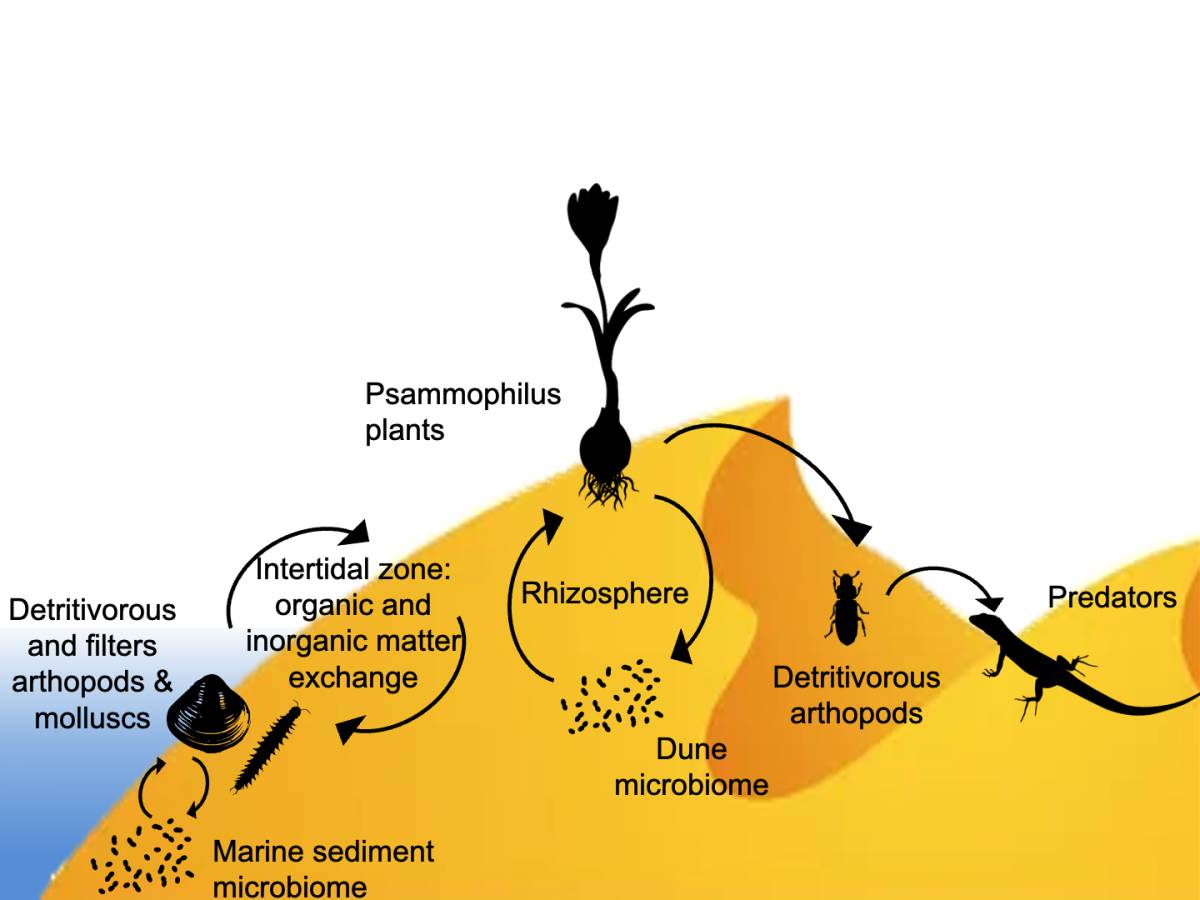
Coastal dunes, critical yet threatened habitats, face pressures from urbanization, pollution, and climate change. Heavy metals, originating from anthropogenic sources, accumulate in soils, sediments, and organisms across terrestrial and marine food webs, posing severe ecological risks.
KORAL will combine field surveys of vegetation, fauna, and marine macrobenthos with chemical analyses of pollutants. Molecular investigations will focus on two key bioindicator species and on microbial communities in soil and sediments, using genomics, transcriptomics, and metabarcoding. Comparative analyses between polluted and pristine sites, particularly in and near Italian Sites of National Interest (SIN), will reveal patterns of genomic erosion, differential gene expression, and shifts in microbial diversity linked to contamination.
The project aims to identify novel biomarker genes for early detection of environmental stress, enabling improved monitoring, conservation, and restoration strategies. By integrating ecological, chemical, and molecular data, KORAL will provide a robust, ecosystem-wide framework for assessing and mitigating heavy metal impacts in coastal environments.
The project team includes researchers from two CNR Institutes, IRET and IRBIM (department DSSTTA), and Department of Ecological and Biological Sciences (DEB), Tuscia University.

